How to Identify Roof Damage After a Storm: Step-by-Step Inspection Checklist
Storms can turn calm nights into mornings of uncertainty. You hear the wind howl and wonder what’s happening above your head. Then, as the clouds clear, you worry: Is my roof safe? Is the damage minor—or a bigger problem waiting to unfold?
At Platinum Construction, we know just how overwhelming this moment can feel. Fast action can save you thousands in repairs. But safety and know-how come first. Here’s a step-by-step inspection checklist to guide you through those crucial first steps after a storm.
Why Post-Storm Roof Inspections Matter 🏠
A leak can start small—just a trickle, a shadowy stain. But left unchecked, water seeps in like an uninvited guest, quietly eating away at your home’s bones. According to the National Roofing Contractors Association (NRCA), immediate inspections after severe weather help prevent minor issues from turning into major structural repairs.
Missing shingles, cracked flashing, and clogged gutters can all allow water to enter. In commercial buildings, just a single breach can disrupt business. For homeowners, the damage can multiply quickly—affecting insulation, ceilings, and even electrical systems.
Prompt inspection protects your investment and your peace of mind. And remember: climbing on the roof without training is risky. Most damage can be seen from the ground or inside your home.
Safety First: What to Do Before Going Outside
Before you inspect anything, keep safety at the top of your mind. A damaged roof is unpredictable—like a patch of ice hidden under fresh snow.
Quick Safety Checklist:
- Wait until the storm has fully passed and it’s safe to go outdoors.
- Wear closed-toe shoes with good grip.
- Avoid downed power lines or debris.
- Do not climb on the roof—leave that to trained professionals.
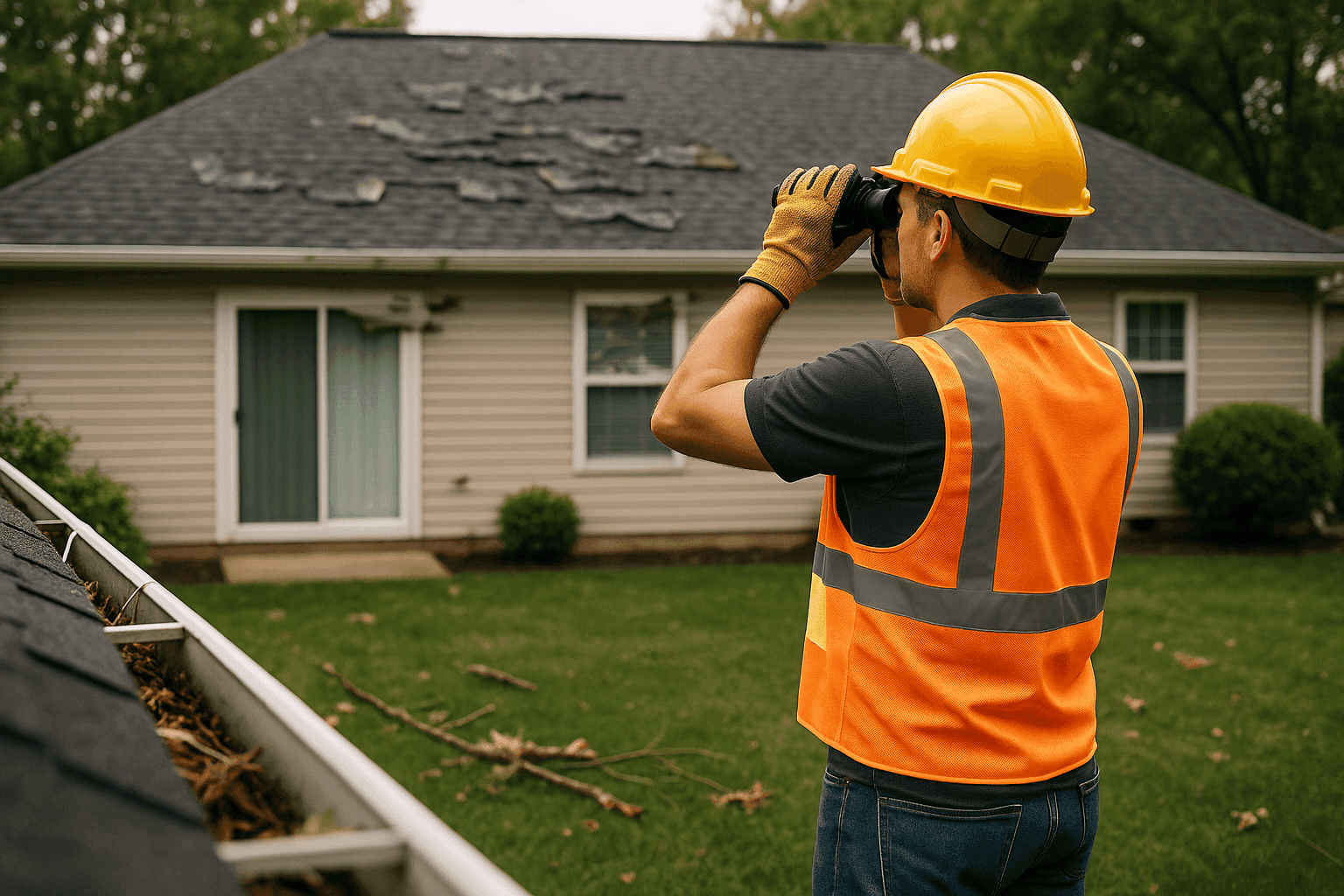
- Use binoculars for a better view from the ground.
- If you notice sagging or hear creaking, stay inside and call for help.
According to OSHA guidelines, falls remain the leading cause of serious injury in construction. Even if you’re just inspecting your property, treat the roof as a high-risk zone.
Visual Signs of Roof Damage (Shingles, Flashing, Gutters, Skylights)
Your eyes are your first tool. Walk around your home or commercial building and look up from several angles. Here’s what to check:
Shingle Issues
- Missing shingles: Look for bare patches, especially at the roof’s edges or peaks.
- Curling or lifted edges: Wind can peel shingles like the pages of a book.
- Granule loss: Check gutters and downspouts for dark, sand-like debris.
- Cracks or dents: Hail can leave bruises or punch holes in asphalt, tile, or metal roofing.
Flashing and Chimney Flashing
- Loose or bent flashing: This metal protects seams around chimneys, vents, and skylights.
- Rust or holes: Water follows the path of least resistance—damaged flashing is a red flag.
- Missing sealant: Gaps where caulking was applied can let water sneak in.
Gutters and Downspouts
- Detached or sagging gutters: Heavy rain or hail can pull gutters away from the fascia.
- Blockages: Leaves, granules, or branches in gutters mean water may back up under the roof.
- Cracked or leaking downspouts: Watch for water flowing where it shouldn’t.
Skylights and Decking
- Cracked glass: Hail can shatter or chip skylights, allowing leaks.
- Damp or stained decking under eaves: Water dripping below soffits is a warning sign.
What to Check Inside Your Home (Attic Leaks, Ceiling Stains)
Sometimes, the first sign of trouble is indoors. Water doesn’t always announce itself until it’s already inside.
- Attic inspection: Carefully enter the attic with a flashlight. Look for wet insulation, water stains, or daylight shining through the roof boards.
- Ceiling stains: Brown rings or bubbling paint on ceilings and walls often point to a roof leak.
- Musty odors: Persistent damp smells signal hidden moisture.
- Warped wood: Floorboards or window frames near the roofline may swell or discolor.
Common Types of Storm Damage
Hail Damage
- Bruised or dented shingles: Hail hits can look like dark spots or soft indentations.
- Cracked tiles or panels: Especially common on tile and metal roofing.
Wind Damage
- Lifted or missing shingles: Wind can peel up edges or remove whole sections.
- Debris impact: Limbs, branches, or flying debris can puncture or scratch the surface.
Tree Limbs and Debris
- Punctures: Heavy branches can break through decking or damage gutters.
- Clogged valleys: Leaves and twigs gather in roof valleys, trapping water.
Printable Step-By-Step Roof Inspection Checklist
- Wait until it’s safe and wear proper footwear.
- Walk around your home, looking up at the roof from all sides.
- Scan for missing, lifted, or damaged shingles.
- Inspect gutters and downspouts for blockages or sagging.
- Check flashing around chimneys, vents, and skylights.
- Look for debris—branches, leaves, or hailstones.
- Go inside; check attic and ceilings for leaks or stains.
- Note any unusual sounds, water, or odors.
- Take photos of anything suspicious.
- If in doubt, call a licensed roofing professional.
Print this list and keep it handy for storm season.
When to Call a Professional Roofing Company
Some things are best left to those with the right training and equipment. If you find:
- Large, visible holes or severe shingle loss
- Water actively dripping inside
- Sagging rooflines or buckled decking
- Damaged skylights, flashing, or chimneys
Contact a licensed roofing company right away. Platinum Construction’s team follows industry standards set by the International Association of Certified Home Inspectors (InterNACHI) and local building codes. We have the right tools and know-how to fix everything from decking near you to complex commercial roofing systems.
DIY vs. Professional Inspections
It’s tempting to check everything yourself. But roofs are tricky—like a puzzle with hidden pieces.
- DIY: Good for spotting obvious signs from the ground and inside your home.
- Professional: Needed for structural checks, climbing on steep slopes, and making repairs safely.
Pros use moisture meters, infrared cameras, and harnesses to check every layer. They can spot subtle problems before they turn into big leaks.
What Pros Do On Arrival
When Platinum Construction arrives, here’s what you can expect:
- Full exterior and interior inspection, following NRCA protocols
- Photographs and written documentation for your records or insurance
- Checking every vulnerable area—shingles, flashing, gutters, skylights, and ventilation
- Recommendations for temporary protection (like tarps) if needed
- Clear advice on next steps, costs, and timeframes
Prevention & Maintenance Tips
The best way to avoid disaster? Keep your roof in shape year-round.
- Clean gutters and downspouts at least twice a year.
- Trim back overhanging branches.
- Schedule annual inspections—especially before and after storm season.
- Fix small issues (like missing shingles or cracked sealant) quickly to avoid bigger repairs.
- Ask about eco-friendly roofing options for durability and energy savings.
Costs & Time Factors
Roof repairs after a storm can range from a quick fix to a full replacement. Here’s what impacts the cost and timing:
- Extent of damage: Minor shingle replacement is fast; structural repairs take longer.
- Material type: Metal, tile, flat, or shingle roofing all have different repair methods.
- Accessibility: Steep or high roofs may require specialized equipment.
- Insurance: Some repairs may be covered, but you’ll need clear documentation.
Most inspections take 1–3 hours. Repairs can range from a same-day patch to several days for larger projects.
When It’s an Emergency 🚨
If you see water pouring in, hear collapsing sounds, or notice electrical issues—don’t wait.
- Move people and valuables away from the affected area.
- Use buckets or tarps to contain water if safe.
- Call emergency services if you suspect structural collapse or downed power lines.
Platinum Construction offers emergency roofing services—day or night.
Frequently Asked Questions
How soon after a storm should I inspect my roof?
As soon as it’s safe. The earlier you spot damage, the easier the fix.
Can I inspect my flat roof or commercial building myself?
Check from the ground and inside, but leave roof access to licensed professionals. Flat roofs can hide water under the surface.
Will my insurance cover storm damage?
Most policies cover sudden storm damage, but documentation is key. Take photos and keep records.
How do I know if my gutters need repair after a storm?
Look for sagging, leaks, or overflowing water. Gutter installation and repair is best done by trained crews.
Local and Seasonal Considerations
Storms look different from state to state. In the Midwest, hail is a big threat. On the coasts, wind and rain rule. No matter where you are, always keep a checklist handy during storm season. Schedule regular inspections—especially if you have tile roofing, metal roofing, or commercial flat roofs.
Don’t forget: preventative maintenance will protect your home or business year-round.
If you need help with storm damage, leak repair, or a full roof inspection—Platinum Construction is here. Our team handles everything from decking near you to complete new roof installation for homes and businesses.
Call Platinum Construction now — or reach us anytime at 888-850-3798 .